
How to Choose the Right Books for Pre-school
Learn how to choose the right preschool books for Playgroup, Nursery, LKG and Prep. A practical guide for school owners on content, progression, activities and teacher support.
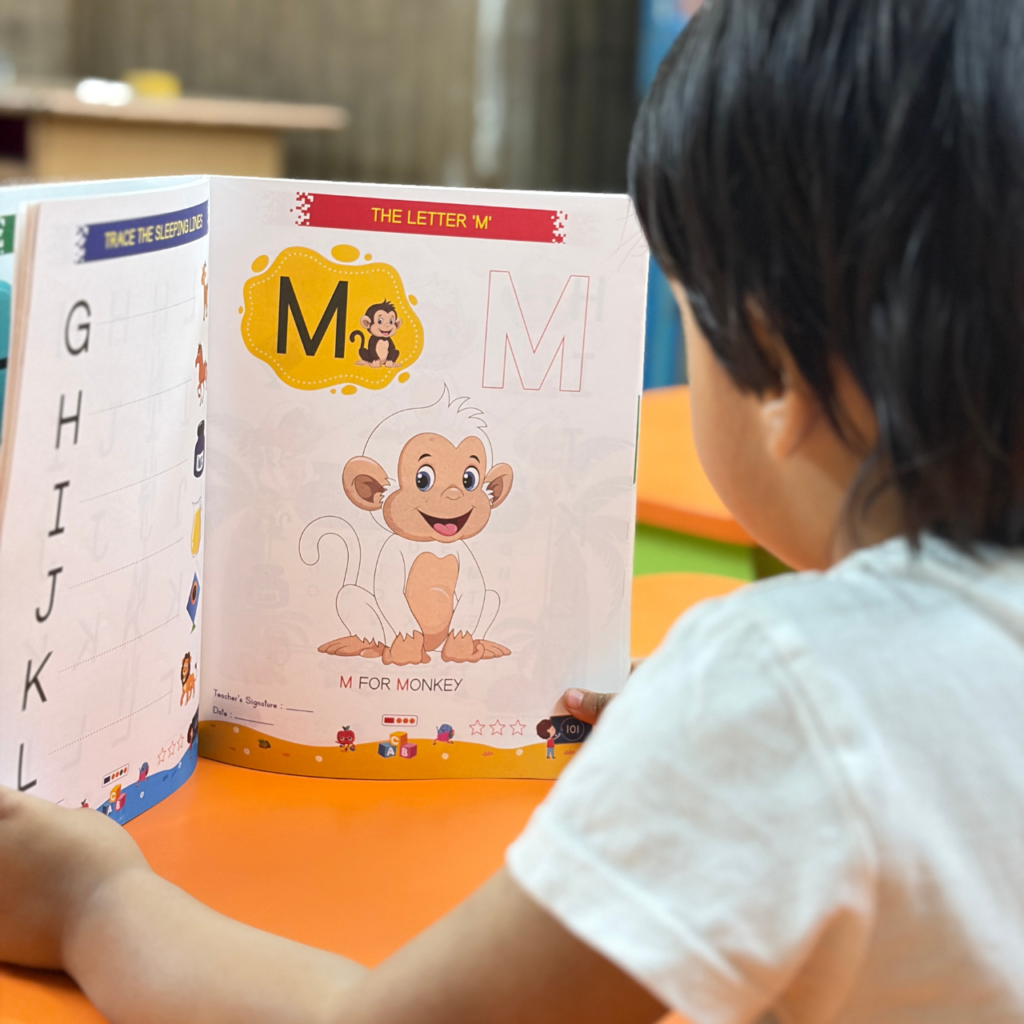
Choosing preschool books is not simply a matter of comparing prices, page counts or attractive covers. The right books should match the child’s age, provide clear learning progression and help teachers conduct classes in an organised manner.
For a school owner, the selected book series also affects teaching quality, parent satisfaction and the overall image of the school. A well-planned curriculum makes learning easier for children while reducing unnecessary work for teachers.
Here are the most important points school owners should consider when selecting books for Playgroup, Nursery, LKG and Prep.
Begin with Age-Appropriate Learning
Children between the ages of two and six develop rapidly. However, every age group has different learning needs. Books should not introduce difficult writing, reading or mathematical concepts before children are ready.
Playgroup Books: Ages 2 to 3 Years
Playgroup books should focus on observation, speaking, listening and basic hand movement.
Suitable activities include:
- Standing, sleeping, curved and slanting lines
- Simple patterns and tracing
- Colours and shapes
- Picture recognition
- Matching similar objects
- Familiar animals, fruits, vegetables and household items
- Simple vocabulary development
At this stage, children should not be pressured to write full alphabets or complete long worksheets. The aim should be to build interest, confidence and fine motor skills.
Nursery Books: Ages 3 to 4 Years
Nursery books can gradually introduce structured learning while continuing to use pictures and activities.
The curriculum may include:
- Capital and small English letters
- Hindi Swar
- Numbers and basic counting
- Alphabet and number tracing
- Colouring and matching exercises
- Picture-based vocabulary
- Simple environmental awareness
Children should receive enough guided practice before being asked to write independently.
LKG Books: Ages 4 to 5 Years
LKG books should build upon the concepts introduced in Nursery. Children can now begin connecting letters with sounds, forming words and understanding basic concepts independently.
Suitable LKG content includes:
- Letter sounds and early phonics
- CVC words such as cat, pen and dog
- Hindi Vyanjan
- Number recognition and writing
- Basic comparison, sequencing and counting
- Simple environmental studies
- Guided handwriting practice
The transition from Nursery to LKG should feel natural. Books should revise earlier concepts without repeating the same content throughout the year.
Prep Books: Ages 5 to 6 Years
Prep, also known as Primer or UKG, should prepare children for Class 1 without creating unnecessary academic pressure.
Books at this level may cover:
- Phonics and word building
- Reading short sentences
- Basic English grammar
- Hindi Matras and simple words
- Addition, subtraction and number concepts
- Environmental awareness
- Independent writing and comprehension
- School-readiness activities
By the end of Prep, children should be comfortable with basic reading, writing, speaking and number skills.
Check Progression Across All Classes
Do not evaluate each class in isolation. Ask the publisher to explain how the curriculum progresses from Playgroup to Prep.
For example, pattern writing in Playgroup should prepare children for alphabet tracing in Nursery. Alphabet recognition in Nursery should support word formation in LKG. Word formation should then lead to sentence reading and writing in Prep.
A good book series should avoid two common problems:
- Repeating the same lessons year after year
- Introducing advanced concepts without adequate preparation
School owners should ideally review sample books from all four classes before finalising a curriculum.
Look Beyond the Textbook
Preschool children learn through seeing, speaking, doing and repeating. Books should therefore include more than explanations and writing pages.
Look for a healthy combination of:
- Picture conversations
- Oral questions
- Tracing and writing
- Matching and colouring
- Observation activities
- Classwork
- Homework
- Revision
- Assessment exercises
When the textbook, classwork, homework and workbook follow the same lesson sequence, children receive better continuity between school and home.
Consider the Teacher’s Daily Workload
A book may appear attractive to parents but still be difficult for teachers to use. Before selecting it, ask teachers to examine its lesson sequence and classroom activities.
Books with predefined lesson plans can help teachers understand:
- What to teach each day
- Which activity to conduct
- What classwork to assign
- What homework to give
- When to revise or assess a concept
This saves teachers from planning every lesson, homework task and diary note separately. It also helps maintain similar teaching standards across different sections of the same class.
Choose Child-Friendly Book Size and Design
Young children should be able to hold, open and use their books comfortably.
Very large or heavy books can be difficult for small hands. A full-year subject book can also add unnecessary weight to the school bag. Dividing each subject into smaller parts makes the books easier to handle and allows children to carry only the current part.
The design should also include:
- Clear and readable fonts
- Adequate writing space
- Colourful but uncluttered pages
- Familiar and age-appropriate pictures
- Good-quality paper and printing
- Clear instructions for teachers and parents
Reading and writing fonts should look similar wherever possible. This reduces confusion and encourages better handwriting.
Review Vocabulary and Communication Skills
Preschool learning should not be limited to tracing letters and numbers. Books should encourage children to speak, identify, describe and answer questions.
Check whether each lesson introduces useful new words through pictures and familiar situations. A wider vocabulary helps children participate in classroom conversations and express themselves with greater confidence.
Ask About Teacher Training and Support
Even a well-designed curriculum may not deliver the expected results if teachers do not understand how to use it.
Before choosing a publisher, ask:
- Is teacher training provided?
- Are lesson plans explained?
- Is academic support available during the session?
- Can the school receive sample books before ordering?
- Is help available when teachers have questions?
- Are replacement and delivery processes properly managed?
The relationship with the publisher should continue after the books have been purchased.
Evaluate the Complete Book Set
Avoid selecting a curriculum after seeing only one attractive book. Review books for English, Hindi, Maths, EVS, handwriting, phonics and other subjects included in the class set.
Check whether the complete set:
- Covers all important learning areas
- Follows one clear teaching approach
- Avoids unnecessary duplication
- Provides enough practice
- Remains manageable for children
- Offers value to the school and parents
Teachers should also be included in the final evaluation because they will use the books every day.
How Kenbee Books Support Preschool Teaching
Kenbee Books from Kenbee Edutech Pvt Ltd are designed as a progressive curriculum for Playgroup, Nursery, LKG and Prep.
Subjects are divided into smaller parts to reduce the need for children to carry a heavy full-year book. Each subject book combines the textbook, classwork, homework and workbook within one planned learning sequence.
Kenbee Books also include predefined lesson plans, engaging exercises, vocabulary-building opportunities and handwriting-friendly fonts. Teacher training is provided to help schools implement the curriculum effectively.
School owners can explore class-wise Kenbee book sets and evaluate their suitability before making an academic decision.
Final Checklist for School Owners
The right preschool books should be age-appropriate, progressive, engaging and easy to use. They should support the child as well as the teacher.
Before finalising a curriculum, ask one simple question:
Will these books make teaching more organised and learning more enjoyable from Playgroup to Prep?
When the answer is yes, the school is more likely to achieve better classroom participation, smoother teacher planning and greater parent confidence.
Frequently Asked Questions
Which books are best for preschool children?
The best preschool books are age-appropriate, activity-based and arranged in a clear learning sequence. They should gradually develop language, writing, number, observation and communication skills.
Should a school use books from one publisher for all preschool classes?
Using a well-planned series from one publisher can provide better continuity from Playgroup to Prep. However, school owners should still review the complete curriculum before making a decision.
Should teachers be involved in selecting preschool books?
Yes. Teachers can identify whether the activities, instructions, lesson order and writing exercises are practical for classroom use.
Why should preschool subjects be divided into parts?
Smaller parts are easier for young children to handle. They can reduce school-bag weight and help teachers focus on the portion being taught during a particular period.
You may also like
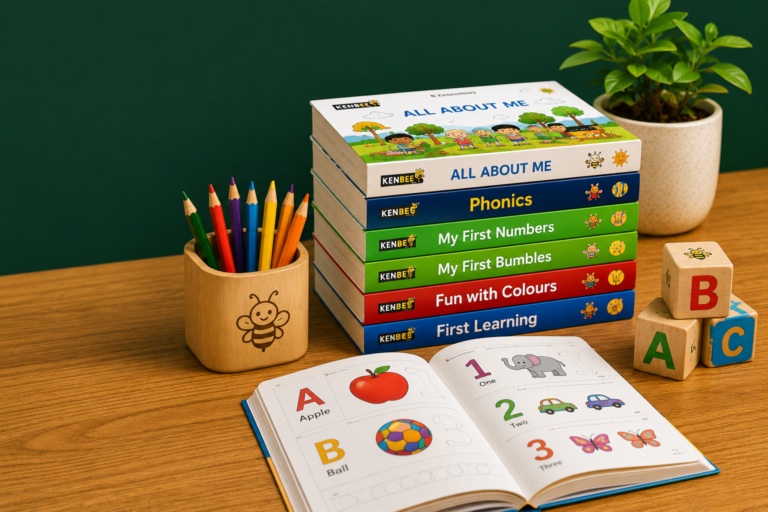
How Good School Books Can Improve Early Education in India
Learn how well-designed school books can improve early education in India by supporting children, teachers, parents and preschool management.
Read Article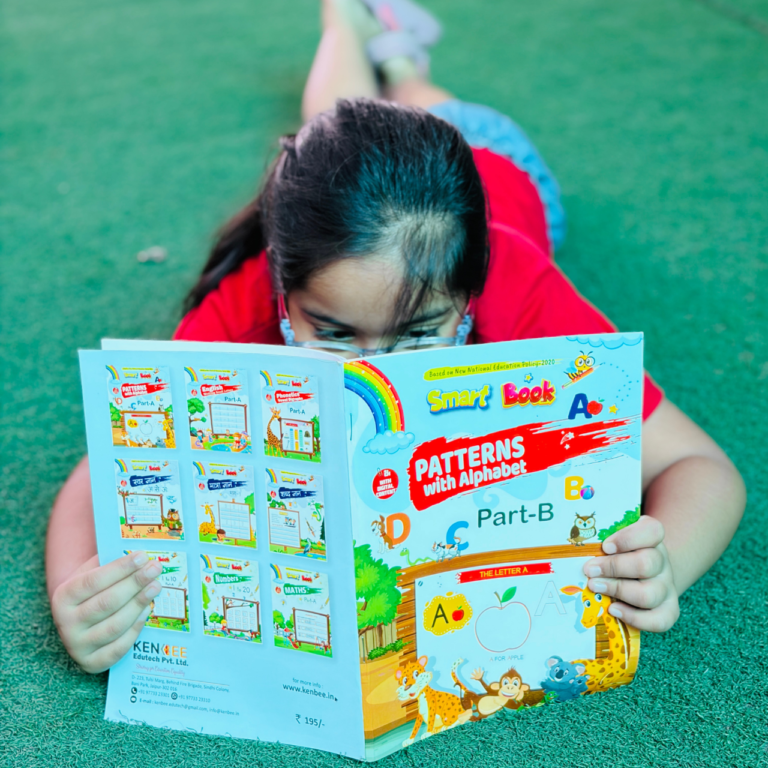
How Activity-Based Preschool Books Make Learning Enjoyable
Learn how activity-based preschool books make learning enjoyable through pictures, tracing, matching, conversation and hands-on practice.
Read Article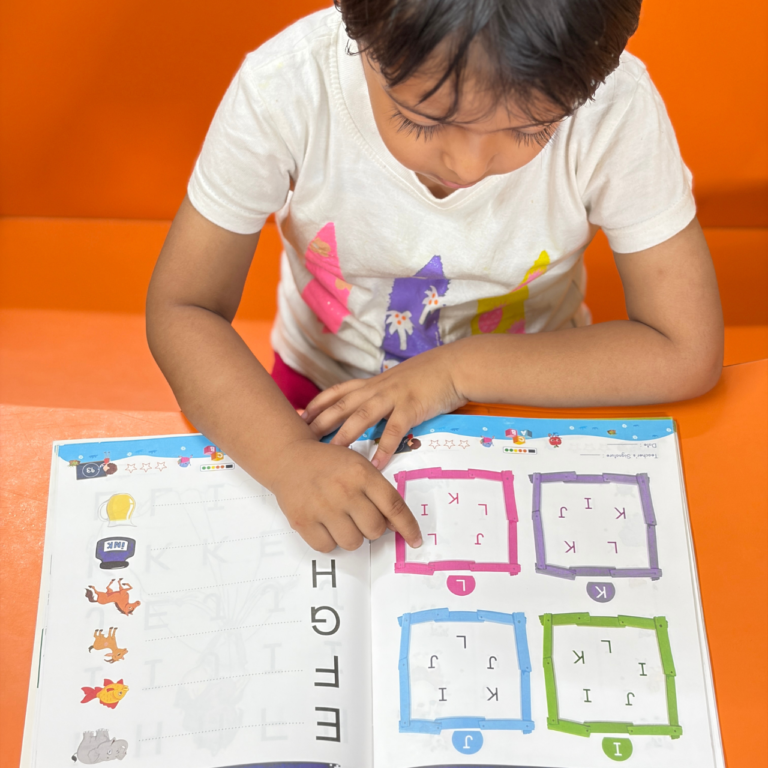
How Kenbee’s 4-in-1 Preschool Books Simplify Teaching and Learning
Discover how Kenbee’s 4-in-1 preschool books combine textbook lessons, classwork, homework and practice in one organised book for easier teaching and learning.
Read Article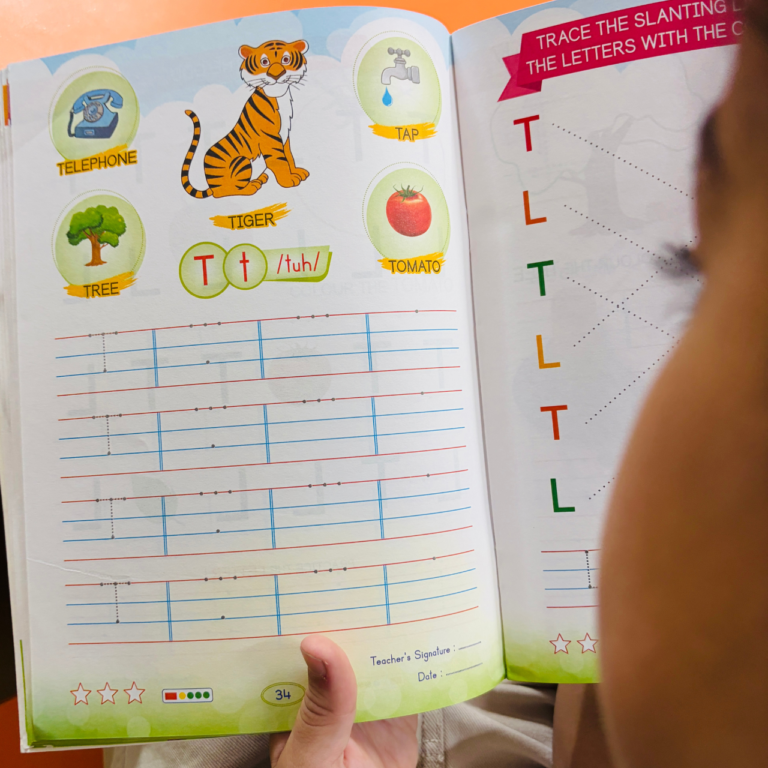
How Picture Books Improve Vocabulary in Young Children
Learn how picture books help young children build vocabulary, improve speaking skills and understand new words through images, repetition and conversation.
Read Article